

What Is an Experience Calculator? 📊
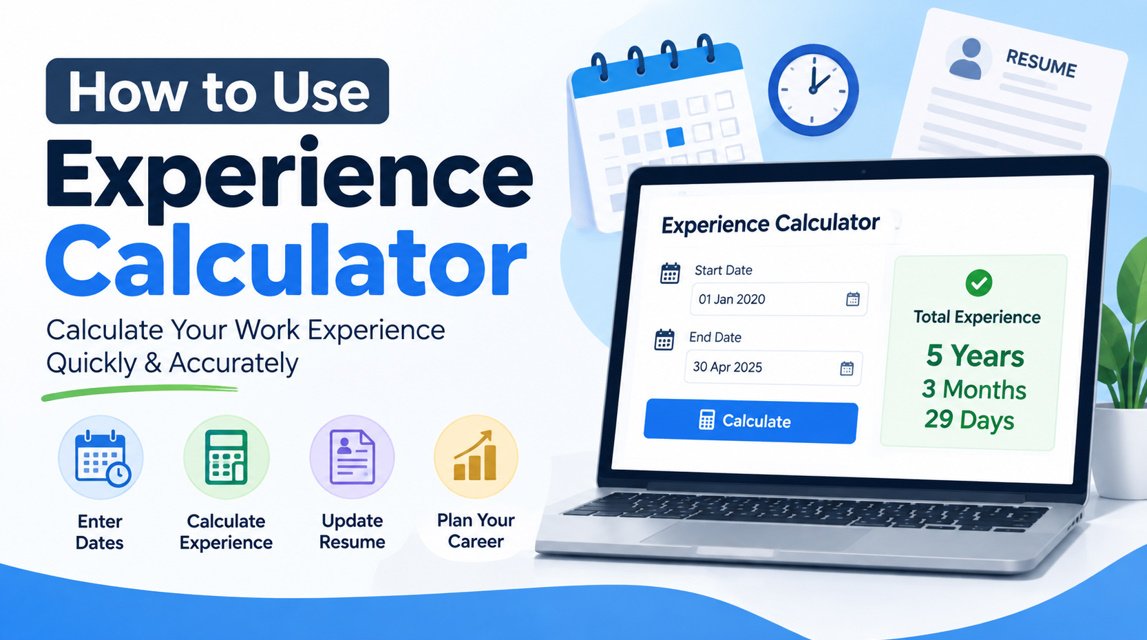
Use of Experience Calculator is an online tool designed to determine the total amount of professional or work experience between two or more dates. Instead of manually counting years, months, and days, users can enter employment start and end dates and receive an instant calculation.
The calculator is useful for employees, job seekers, recruiters, students, and professionals who want a quick use of work experience calculation. Depending on the tool, it may show experience in years, months, days, or a combined format for easier understanding.
- Calculates work experience
- Uses employment dates
- Saves manual calculations
- Shows years and months
- Helps track career history
- Provides quick results
- Useful for job applications
- Beginner-friendly interface
How Does an Experience Calculator Work? 🧮
An Experience Calculator generally works by comparing a start date with an end date. The tool calculates the difference between these dates while accounting for different month lengths and leap years. This makes the process more convenient than manually counting calendar days.
Some advanced calculators allow users to enter multiple employment periods. They can calculate each period separately and combine the results to estimate total professional experience, making them particularly useful for people with several jobs or career stages.
- Enter a start date
- Enter an end date
- Select the required format
- Add multiple periods if supported
- Check calculated duration
- Review years and months
- Compare employment periods
- Record the final result
How to Use Experience Calculator Step by Step 📝
To use an Experience Calculator, first locate the date fields provided by the tool. Enter the date when your employment, internship, freelance work, or professional activity began. Make sure the day, month, and year are entered correctly to avoid an inaccurate result.
Next, enter the relevant end date. If you are still working in the same position, some calculators allow you to use the current date. Click the Calculate button, and the tool will display your total experience according to its calculation method.
- Open the calculator
- Enter your starting date
- Enter your ending date
- Check all dates
- Click Calculate
- Wait for the result
- Read the duration
- Save the result
How to Calculate Experience for Multiple Jobs? 💼
If you have worked for several companies, calculate each employment period separately before determining your overall experience. For example, you might have worked at one company from one date to another and then started a second position later. Entering each period helps organize your career timeline.
When employment periods do not overlap, their durations can generally be combined to estimate total experience. However, overlapping jobs should be handled carefully because simply adding both periods may count the same calendar time twice. Always review the calculator’s method before using the result officially.
- List every job
- Record start dates
- Record end dates
- Calculate each period
- Check overlapping dates
- Combine valid periods
- Review total experience
- Keep employment records
What Information Do You Need? 📅
Most Experience Calculators require only basic date information. Usually, you need the employment start date and employment end date. Some tools may also ask whether the dates should be calculated inclusively, particularly when you need an exact number of calendar days.
For more accurate career tracking, keep your employment dates consistent with official records. Appointment letters, contracts, certificates, and employment records can help verify dates when completing a job application or preparing a professional profile.
- Start date
- End date
- Job title
- Employment period
- Internship dates
- Freelance period
- Career break dates
- Supporting records
What Are the Benefits of an Experience Calculator? ⭐
One major benefit is time savings. Manually calculating experience across different months and years can become confusing, especially when several employment periods are involved. An online calculator performs the date difference quickly and presents the information in an easy-to-understand format.
An Experience Calculator can also support career planning and job applications. It helps users understand their professional timeline, organize employment history, and estimate whether they meet an experience requirement. Recruiters and HR professionals may also use date calculations when reviewing candidate records.
- Saves calculation time
- Reduces manual effort
- Simplifies date differences
- Organizes career history
- Supports job applications
- Helps verify experience
- Useful for recruiters
- Improves career tracking
Common Mistakes When Using an Experience Calculator ⚠️
A common mistake is entering an incorrect start or end date. Even a small date error can change the final experience calculation. Users should double-check the dates against reliable employment documents before relying on the result for an application or professional requirement.
Another issue is misunderstanding how overlapping employment periods are treated. For example, working two jobs simultaneously does not necessarily mean the calendar duration should be doubled. Always understand whether your calculator measures calendar experience or simply adds individual periods.
- Entering incorrect dates
- Reversing start and end dates
- Forgetting an employment period
- Ignoring overlapping jobs
- Misreading years and months
- Assuming every calculator works alike
- Skipping date verification
- Relying on estimates
Best Practices for Accurate Experience Calculation 🚀
For reliable results, prepare your employment history before using the calculator. Write down every relevant start and end date, check for gaps or overlaps, and enter information carefully. If you’re calculating experience for a formal application, compare the final result with the organization’s specific experience requirements.
Remember that an Experience Calculator is primarily a date-difference tool. Different organizations may define qualifying experience differently. Full-time, part-time, internship, freelance, and overlapping employment can be treated differently depending on the rules. Use the calculator as a convenient estimate and verify official requirements when necessary.
- Verify employment dates
- Keep records updated
- Check calculation settings
- Review overlapping periods
- Understand qualifying experience
- Compare official requirements
- Recalculate when dates change
- Use results consistently